How to Select Formal Technical Ceramics: A Comprehensive Guide for B2B Buyers
1. Introduction
In the world of advanced manufacturing, formal technical ceramics have become indispensable materials for applications requiring high performance under extreme conditions. From aerospace components to semiconductor processing equipment, these ceramics offer unique combinations of properties—such as high temperature resistance, wear resistance, corrosion resistance, and electrical insulation—that metals and polymers cannot match. However, selecting the right technical ceramic for a specific application is a complex process that involves careful consideration of material properties, manufacturing constraints, and application requirements. This guide aims to provide B2B buyers—architects, contractors, and procurement managers—with a systematic approach to selecting formal technical ceramics, ensuring optimal performance, reliability, and cost-effectiveness.
2. Understanding Technical Ceramics: Definition and Key Properties
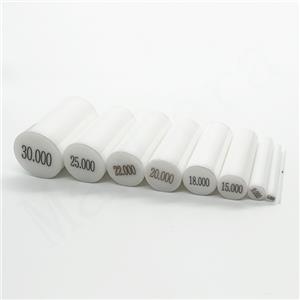
Technical ceramics, also known as advanced ceramics or engineering ceramics, are a class of materials engineered to exhibit superior mechanical, thermal, electrical, and chemical properties. Unlike traditional ceramics (e.g., pottery, bricks), technical ceramics are made from highly purified raw materials and are manufactured with precise control over composition and microstructure. Key properties that distinguish technical ceramics include:
- High hardness and wear resistance: Essential for applications involving abrasion, erosion, or sliding contact.
- Excellent thermal stability: Ability to withstand high temperatures (up to 1600°C or more) without degradation.
- Corrosion resistance: Resistance to attack by acids, alkalis, and other corrosive media.
- Electrical insulation: High dielectric strength and low electrical conductivity, suitable for insulators and electronic components.
- Low density: Compared to metals, technical ceramics offer weight savings.
- Biocompatibility: Some ceramics, like alumina and zirconia, are biocompatible and used in medical implants.
These properties make technical ceramics ideal for demanding environments where reliability and longevity are critical.
3. Critical Factors in Selecting Technical Ceramics
Selecting the appropriate technical ceramic requires a systematic evaluation of several factors. The following checklist can guide the decision-making process:
3.1 Application Requirements
- Mechanical loads: Determine the type and magnitude of stresses (compressive, tensile, bending) the component will experience. Ceramics are strong in compression but weak in tension, so design must account for this.
- Thermal conditions: Consider operating temperature, thermal cycling, and thermal shock resistance. Materials like silicon nitride and silicon carbide excel in thermal shock resistance.
- Chemical environment: Identify exposure to corrosive substances, solvents, or gases. Alumina and zirconia offer good chemical resistance, while silicon carbide is excellent for high-temperature corrosive environments.
- Electrical properties: For insulating applications, alumina and aluminum nitride are common; for conductive or semiconductive applications, silicon carbide may be suitable.
- Wear and friction: For wear parts, consider hardness and tribological properties. Zirconia and alumina are often used in wear-resistant components.
3.2 Material Properties
Each technical ceramic has a unique property profile. Key properties to compare include:
- Hardness (Vickers, HV): Indicates wear resistance. Values range from ~1200 HV for alumina to ~1500 HV for zirconia and ~2500 HV for boron carbide.
- Fracture toughness (MPa·m1/2): Resistance to crack propagation. Zirconia has high toughness (~10 MPa·m1/2), while alumina is lower (~4 MPa·m1/2).
- Flexural strength (MPa): Bending strength. Silicon nitride and zirconia offer high strength (>800 MPa).
- Thermal conductivity (W/m·K): Important for heat dissipation. Aluminum nitride has high conductivity (~170 W/m·K), while zirconia is low (~2 W/m·K).
- Dielectric strength (kV/mm): For electrical insulation. Alumina has excellent dielectric strength (>15 kV/mm).
- Maximum use temperature (°C): Alumina up to 1600°C, silicon carbide up to 1600°C, boron nitride up to 1000°C in oxidizing atmospheres.
3.3 Design and Manufacturing Constraints
The selected material must be manufacturable into the required shape and size with acceptable tolerances and surface finish. Consider:
- Forming method: Dry pressing, isostatic pressing, injection molding, tape casting, etc. Each method has limitations on size, complexity, and cost.
- Machining capabilities: Diamond grinding, lapping, polishing, and ultrasonic machining are used to achieve tight tolerances and fine surface finishes. Not all ceramics are equally machinable; boron nitride, for instance, is relatively easy to machine.
- Sintering behavior: Shrinkage during sintering must be accounted for in mold design. Some materials require hot isostatic pressing (HIP) to achieve full density.
3.4 Cost and Availability
While technical ceramics can offer superior performance, they often come at a higher cost than metals. Consider:
- Raw material cost: Zirconia and boron nitride are more expensive than alumina.
- Manufacturing cost: Complex shapes and tight tolerances increase cost. High-volume production can reduce unit cost.
- Lead time: Custom ceramic components may require longer lead times than standard metal parts.
- Supplier reliability: Choose suppliers with proven expertise and capacity to deliver consistent quality.
3.5 Quality and Reliability
For critical applications, quality assurance is paramount. Look for suppliers with:
- ISO 9001 certification: Indicates a robust quality management system.
- In-house testing capabilities: Such as dimensional inspection, non-destructive testing (NDT), and mechanical testing.
- Traceability: Ability to trace materials and processes back to raw material lots.
- Experience in similar applications: A supplier with a track record in your industry is more likely to understand your needs.
4. Material Selection Guide: Comparing Common Technical Ceramics
To aid in material selection, the following table summarizes key properties of common technical ceramics. Note that values are typical and may vary by manufacturer and grade.
| Material | Hardness (HV) | Fracture Toughness (MPa·m1/2) | Flexural Strength (MPa) | Max Use Temp (°C) | Thermal Conductivity (W/m·K) | Dielectric Strength (kV/mm) | Key Characteristics | Typical Applications |
|---|---|---|---|---|---|---|---|---|
| Alumina (Al2O3) | 1200-1500 | 3.5-4.5 | 300-400 | 1600 | 20-30 | 15-20 | Good wear resistance, electrical insulation, chemical resistance; low cost | Insulators, wear parts, seals, substrates |
| Zirconia (ZrO2) | 1200-1400 | 8-12 | 800-1000 | 1000 | 2-3 | 10-12 | High toughness, high strength, good wear resistance; susceptible to hydrothermal aging | Cutting tools, pumps, valves, medical implants |
| Silicon Nitride (Si3N4) | 1400-1600 | 6-8 | 800-1000 | 1400 | 20-30 | 10-15 | High strength, excellent thermal shock resistance, good wear resistance | Bearings, turbine blades, welding nozzles |
| Silicon Carbide (SiC) | 2500-3000 | 4-5 | 400-500 | 1600 | 100-120 | Low | Excellent high-temperature strength, corrosion resistance, thermal conductivity; semiconductor | Heat exchangers, seals, semiconductor components |
| Boron Nitride (BN) | ~2000 (basal plane) | ~2 | ~100 | 1000 (oxidizing) | 30-60 | High | Lubricious, machinable, high thermal conductivity, electrically insulating | Crucibles, heat sinks, insulators, mold release |
| Aluminum Nitride (AlN) | 1100-1200 | 3-4 | 300-400 | 1000 | 150-180 | 15-20 | High thermal conductivity, electrical insulation, low thermal expansion | Heat sinks, substrates, electronic packaging |
5. Manufacturing Processes and Their Impact on Selection
The manufacturing process significantly affects the properties, cost, and lead time of technical ceramic components. Common processes include:
- Dry pressing: Suitable for simple shapes with high volume; low cost but limited complexity.
- Isostatic pressing: Produces uniform density in complex shapes; higher cost but better mechanical properties.
- Injection molding: For complex geometries with high precision; requires expensive tooling but high production rates.
- Tape casting: For thin, flat components (e.g., substrates); produces uniform thickness.
- Extrusion: For long, constant cross-section parts (e.g., tubes, rods).
After forming, ceramics are sintered at high temperatures. Some materials require hot isostatic pressing (HIP) to eliminate porosity and improve strength. Machining is often necessary to achieve final dimensions and surface finish. Diamond grinding, lapping, and polishing are common. The choice of manufacturing process must align with the design requirements and production volume.
6. Quality Assurance and Standards
Ensuring the quality and reliability of technical ceramic components is critical. Buyers should look for suppliers that adhere to international standards and have robust quality control processes. Key standards include:
- ISO 9001:2015: Quality management system.
- ISO 14001: Environmental management system.
- ASTM standards: For material testing (e.g., ASTM C1161 for flexural strength, ASTM C1327 for hardness).
- Industry-specific standards: Such as ISO 13485 for medical devices, or ASTM F2886 for ceramic implants.
Suppliers should provide material certificates, test reports, and traceability documentation. In-process inspection and final inspection should be performed using calibrated equipment. For critical applications, consider non-destructive testing (NDT) methods like ultrasonic testing or dye penetrant inspection.
7. Supplier Evaluation and Partnership
Selecting the right supplier is as important as selecting the right material. A reliable supplier can provide technical expertise, consistent quality, and timely delivery. When evaluating suppliers, consider:
- Experience and expertise: Look for a supplier with a proven track record in your industry and application.
- Material range: A supplier offering a broad range of materials can provide unbiased recommendations.
- Manufacturing capabilities: In-house forming, sintering, and machining capabilities ensure better control over quality and lead time.
- Quality management: ISO 9001 certification and a robust quality assurance system.
- Responsiveness: Prompt communication and technical support.
- Customization: Ability to develop custom solutions from prototype to mass production.
- Cost competitiveness: Fair pricing without compromising quality.
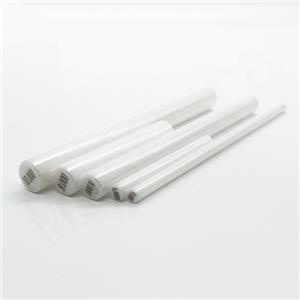
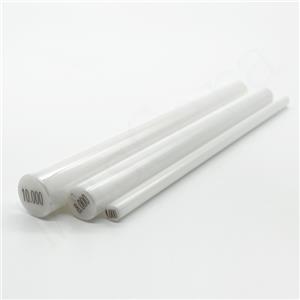
XIAMEN MASCERA TECHNOLOGY CO.,LTD. exemplifies these qualities. As a China-based supplier specialized in custom manufacturing of technical ceramic components, Mascera offers a broad range of high-performance ceramic materials including alumina, zirconia, silicon nitride, silicon carbide, boron nitride, and aluminum nitride. The company has completed production lines for molding, sintering, high-precision machining, and quality inspection. Mascera is ISO9001:2015 certified and has a qualified rate of more than 99%. With products exported to over 30 countries and applications in machinery, automotive, chemistry, medical, energy, electronic, semiconductor, aerospace, and telecommunication industries, Mascera has built faithful partnerships with customers worldwide. Their multiple material options, custom manufacturing services, completed manufacturing technologies, systemized quality inspection, and quick response time (within 24 hours) make them a reliable partner for technical ceramic solutions.
8. Cost Considerations and Total Cost of Ownership
While the initial cost of technical ceramics may be higher than metals, the total cost of ownership (TCO) can be lower due to reduced downtime, longer service life, and lower maintenance. Factors to consider:
- Performance benefits: Longer life, reduced wear, and fewer replacements.
- Energy efficiency: Some ceramics, like silicon carbide, offer high thermal conductivity, improving heat transfer efficiency.
- Maintenance costs: Ceramic components often require less maintenance.
- Downtime costs: Reliable ceramic parts reduce unplanned downtime.
When comparing quotes, ensure that the scope includes all necessary machining, inspection, and documentation. Also, consider the supplier's ability to provide value engineering to optimize design for cost without sacrificing performance.
9. Case Studies and Applications
To illustrate the selection process, consider the following examples:
9.1 High-Temperature Furnace Components
Application: Kiln furniture and heating element supports in a high-temperature furnace operating at 1400°C in an oxidizing atmosphere. Requirements: High temperature resistance, thermal shock resistance, and electrical insulation. Material selection: Alumina (99.7%) is a cost-effective choice with good performance. Silicon nitride offers better thermal shock resistance but at higher cost. Supplier: Mascera provides custom alumina components with precise dimensions and high purity.
9.2 Wear-Resistant Pump Components
Application: Plungers and liners for a high-pressure pump handling abrasive slurries. Requirements: High wear resistance, corrosion resistance, and mechanical strength. Material selection: Zirconia offers high toughness and wear resistance, while silicon carbide provides extreme hardness and corrosion resistance. Supplier: Mascera manufactures zirconia and silicon carbide components with tight tolerances and surface finishes.
9.3 Semiconductor Processing Equipment
Application: Insulators and heat sinks in a plasma etching chamber. Requirements: High electrical insulation, thermal conductivity, and plasma resistance. Material selection: Aluminum nitride for heat sinks, alumina for insulators. Supplier: Mascera supplies high-purity alumina and aluminum nitride components with low contamination levels.
10. Future Trends in Technical Ceramics
The field of technical ceramics is continuously evolving. Key trends include:
- Advanced materials: Development of ceramic matrix composites (CMCs) for higher toughness and temperature capability.
- Additive manufacturing: 3D printing of ceramics enables complex geometries and rapid prototyping.
- Nanostructured ceramics: Improved mechanical properties through grain refinement.
- Multifunctional ceramics: Integration of electrical, thermal, and mechanical functions.
- Sustainability: Development of eco-friendly manufacturing processes and recyclable ceramics.
Staying informed about these trends can help buyers make strategic decisions.
11. Conclusion
Selecting formal technical ceramics is a multifaceted process that requires a thorough understanding of application requirements, material properties, manufacturing constraints, and supplier capabilities. By following the systematic approach outlined in this guide, B2B buyers can make informed decisions that optimize performance, reliability, and cost. Partnering with an experienced and reliable supplier like XIAMEN MASCERA TECHNOLOGY CO.,LTD. can further ensure success. With their extensive material options, custom manufacturing services, and commitment to quality, Mascera is well-positioned to support your technical ceramic needs from prototype to mass production.
12. Contact Information
For more information or to discuss your specific requirements, please contact XIAMEN MASCERA TECHNOLOGY CO.,LTD.:
- Email: info@mascera-tec.com
- Phone: +86-592-5530093
Their team of experts is ready to assist you within 24 hours.