Technical Ceramics vs Traditional Ceramics – Key Material and Performance Differences
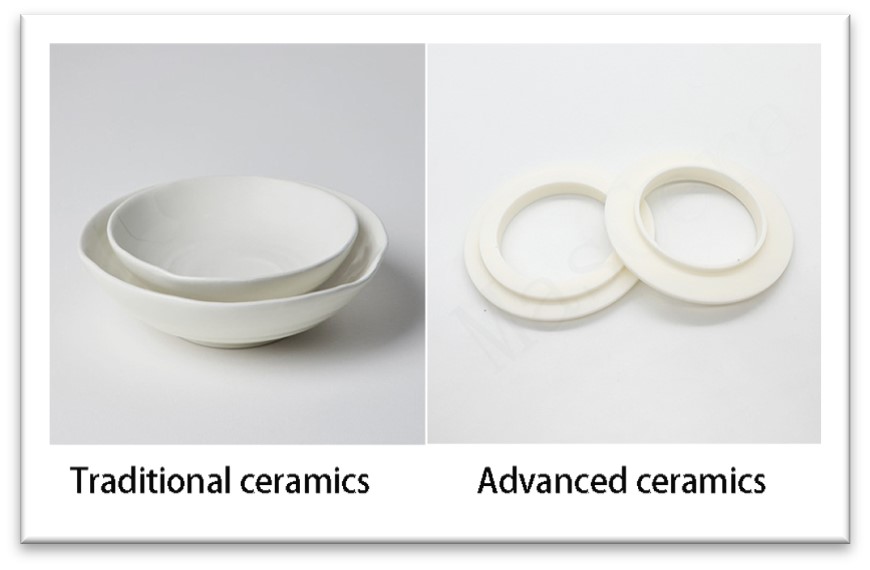
Ceramic materials have been used for thousands of years, but not all ceramics serve the same purpose. While traditional ceramics are widely used in construction, household goods, and decorative products, Technical Ceramics are engineered specifically for demanding industrial environments. Understanding the differences between these two material categories is essential for engineers, designers, and manufacturers selecting materials for high-performance applications. This article compares Technical Ceramics and traditional ceramics from the perspective of composition, manufacturing process, mechanical behavior, thermal stability, and functional performance.
For a broader overview of classification and material systems, you may explore our comprehensive guide to Technical Ceramics.
Raw Material Composition
The most fundamental difference lies in material composition. Traditional ceramics are primarily made from naturally occurring raw materials such as clay, feldspar, and quartz. Their chemical composition varies depending on local mineral sources, and microstructure control is limited. In contrast, Technical Ceramics—also known as Advanced Ceramic Materials or Engineering Ceramics—are produced from highly refined synthetic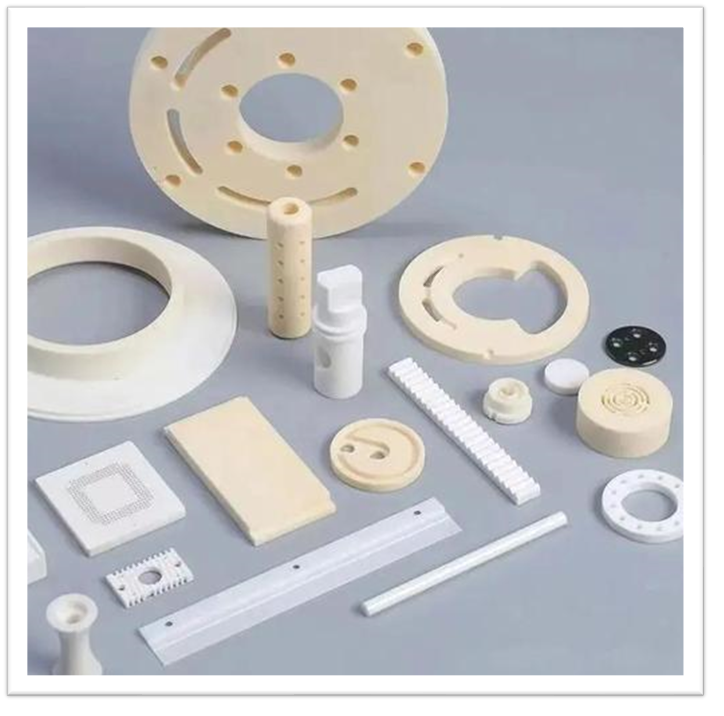 powders with tightly controlled purity levels, often exceeding 95% to 99.9%.
Common Industrial Ceramic Materials include:
• Alumina (Al₂O₃)
• Zirconia (ZrO₂)
• Silicon Nitride (Si₃N₄)
• Aluminum Nitride (AlN)
• Silicon Carbide (SiC)
These materials are engineered at the microstructural level to achieve predictable and repeatable performance.
Manufacturing and Process Control
Traditional ceramics are typically shaped by:
• Slip casting
• Extrusion
• Press forming
• Kiln firing
Dimensional tolerances are relatively loose, and surface finish is usually not critical.
By comparison, Technical Ceramics require advanced manufacturing processes such as:
• Isostatic pressing
• Dry pressing
• Tape casting
• High-temperature sintering
• Precision grinding and CNC machining
The strict control of density, grain size, and porosity enables High-Performance Ceramics to meet demanding industrial standards for strength, insulation, and durability.
Mechanical Performance
Traditional ceramics are generally brittle and mainly used in non-load-bearing applications. Engineering Ceramics, however, offer significantly improved mechanical properties, including:
• High flexural strength
• Exceptional hardness
• Superior wear resistance
• Improved fracture toughness
Because of these properties, Industrial Ceramic Materials are widely used in pump components, bearing systems, valve seats, and precision mechanical assemblies.
A detailed explanation of strength, hardness, and fracture behavior is available in:
👉 Mechanical Properties of Technical Ceramics.
Thermal Stability and Temperature Resistance
Traditional ceramic products can withstand moderate heat, but their thermal shock resistance and dimensional stability are limited. In contrast, Technical Ceramics are specifically designed for:
• High operating temperatures
• Low thermal expansion
• Excellent thermal shock resistance
• Stable performance under rapid temperature cycling
Materials such as silicon nitride and aluminum nitride provide outstanding performance in high-temperature and high-power applications.
For deeper analysis, visit:
👉 Physical Properties of Technical Ceramics.
Electrical and Functional Properties
Many traditional ceramics are naturally insulating but lack controlled electrical characteristics. Advanced Ceramic Materials can be engineered to achieve:
• High dielectric strength
• Controlled dielectric constant
• High electrical resistivity
• Thermal conductivity with electrical insulation
• Semiconductor behavior
These functional properties make Technical Ceramics essential in power electronics, semiconductor equipment, high-voltage systems, and electronic packaging.
To learn more about insulation performance, dielectric strength, and resistivity, see :
👉 Electrical Properties of Technical Ceramics
Application Scope
The differences in material engineering and performance lead to very different application areas. Traditional ceramics are commonly used in:
• Construction materials
• Household products
• Decorative items
• Sanitary ware
Technical Ceramics are used in:
• Electronics and power modules
• Semiconductor manufacturing equipment
• Automotive systems
• Aerospace components
• Medical devices
• Industrial machinery
As industrial systems become more compact, powerful, and reliable, the demand for High-Performance Ceramics continues to grow.
👉 Applications of Technical Ceramics
Conclusion
The distinction between traditional ceramics and Technical Ceramics lies not only in raw materials but also in engineering precision and performance capability. Traditional ceramics serve structural and decorative roles, while Engineering Ceramics and other Industrial Ceramic Materials are designed to withstand extreme mechanical, thermal, and electrical conditions. As industries require higher reliability and longer service life, Advanced Ceramic Materials are increasingly replacing conventional materials in critical applications. Understanding these differences helps engineers choose the right material category for long-term performance and system stability.