Advantages and Disadvantages of Alumina Ceramic
Alumina ceramics (Al₂O₃ ceramic) is an inorganic compound known for its high hardness and excellent mechanical properties. It is widely used in high-temperature environments and demanding industrial applications. However, like any material, it has both advantages and disadvantages. 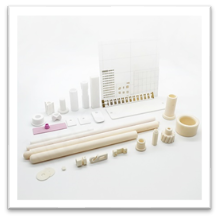
Advantages of Al₂O₃ Ceramic
1. High Hardness and Wear Resistance
Alumina ceramics exhibit exceptional hardness and excellent wear resistance, allowing them to maintain a long service life in abrasive environments.
2. High-Temperature Resistance
High-temperature resistant alumina has a high melting point and outstanding thermal stability, making it suitable for use in extreme conditions up to 1650°C. Additionally, its low thermal expansion coefficient ensures dimensional stability, enhancing precision and reliability in high-temperature applications.
3. Corrosion Resistance
Al₂O₃ ceramic offers excellent chemical resistance, enabling it to perform reliably in corrosive environments where metals or polymers might degrade.
4. Superior Electrical Insulation
Alumina ceramics provide outstanding electrical insulation with minimal high-frequency loss. This characteristic makes them ideal for electronic components where leakage current and electrical failures must be minimized.
5. Optical Properties
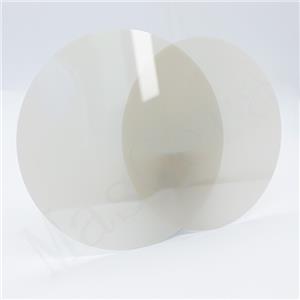
Transparent alumina ceramics (transparent Al₂O₃ ceramic) can be engineered to have excellent optical characteristics, making them useful in applications requiring light transmission.
6. Lightweight Material
With a density ranging from 3.6 to 3.95 g/cm³, alumina ceramics are approximately half the weight of steel, reducing the overall load on machinery and equipment.
Disadvantages of Al₂O₃ Ceramic
1. High Brittleness
One of the main disadvantages of Al₂O₃ ceramic is its brittleness. It is prone to fracture upon impact, which can limit its lifespan in applications subjected to mechanical shocks.
2. Difficult to Machine
Due to its high hardness, alumina ceramic is challenging to process, requiring specialized equipment and techniques. This increases manufacturing costs and extends lead times.
3. Low Thermal Conductivity
Compared to metals, alumina ceramic has relatively poor thermal conductivity. In high-temperature applications, its heat dissipation performance is inferior to materials like silicon carbide (SiC) and aluminum nitride (AlN).
Because the advantages and limitations of alumina ceramics vary significantly depending on operating conditions, geometry, and performance priorities, proper material and design selection is critical. In many cases, alumina ceramics deliver excellent cost-performance, but alternative materials or structural adjustments may be more suitable for demanding thermal or mechanical environments. Understanding how to balance these factors is an important step in real-world component design.
👉 How to choose the right alumina ceramic for your application
For a comprehensive understanding of alumina ceramic materials—including properties, manufacturing processes, grade selection, and typical applications—refer to our complete guide on alumina ceramics.
👉 Everything You Need to Know About Alumina Ceramic