Ceramic Materials
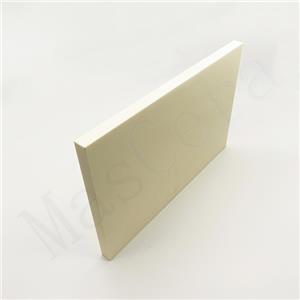
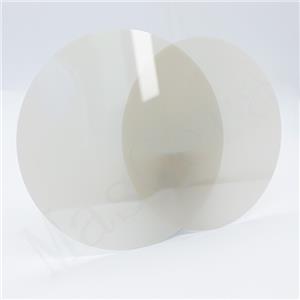
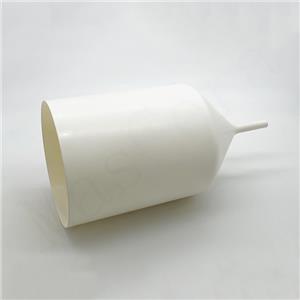
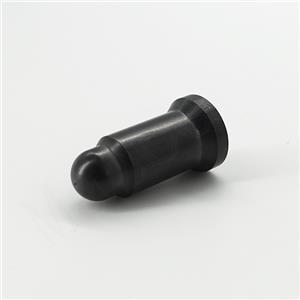
Ceramic Materials focuses on the fundamental characteristics of advanced technical ceramic materials used in industrial applications. This category introduces common ceramic materials such as alumina, aluminum nitride, silicon nitride, silicon carbide, zirconia, and boron nitride, with emphasis on material composition, intrinsic properties, and typical use conditions. The content is intended to help engineers and buyers understand how different ceramic materials perform and how to select suitable materials for specific technical requirements.
-
Technical Ceramics vs Traditional Ceramics – Key Material and Performance Differences
While traditional ceramics are widely used in construction, household goods, and decorative products, Technical Ceramics are engineered specifically for demanding industrial environments. Understanding the differences between these two material categories is essential for engineers, designers, and manufacturers selecting materials for high-performance applications.
02-03-2026 -
How to Choose the Right Alumina Ceramic for Your Application
Learn how to select the right alumina ceramic grade based on application, geometry, and manufacturing process. A practical guide with part-specific recommendations.
14-01-2026 -
Alumina Ceramic Grades Guide: Choosing Between 95% to 99.8% Purity
Explore the differences between alumina ceramic grades (95%–99.8%). Learn how aluminum oxide purity affects electrical insulation, thermal behavior, and industrial applications.
14-01-2026 -
Silicon Carbide for Laser Processing Applications: Enhancing Laser Damage Resistance and Thermal Stability
Among advanced ceramics, Silicon Carbide (SiC) is emerging as a leading material. Its combination of high laser damage resistance, high thermal conductivity, and overall stability makes it exceptionally suitable for modern laser processing applications.
03-12-2025 -
Comparative Analysis of Corundum, Alumina, Cordierite, Mullite, and Corundum Mullite Refractory Ceramics
Refractory ceramics are foundational in high-temperature, structural, and thermal insulation applications. Among the many types available, five key refractory ceramics stand out for their widespread industrial use and contrasting performance: Corundum, Alumina (Al2O3), Cordierite, Mullite, and Corundum Mullite.
12-06-2025 -
Advantages of Zirconia Ceramic Pin Gauges
A zirconia ceramic pin gauge offers high precision, wear resistance, and corrosion resistance, ideal for machining, electronics, and chemical industries. With dimensional stability and customization options, it ensures accurate and durable measurements.
07-03-2025 -
Advantages and Disadvantages of HBN Ceramic
Boron nitride ceramic, particularly in its hot pressed (HPBN) and machinable forms, offers unique advantages such as high-temperature stability, corrosion resistance, electrical insulation, and easy machinability. However, it also has limitations, including lower mechanical strength and hygroscopic properties. Understanding the advantages and disadvantages of BN ceramic is crucial for selecting the right material for specific industrial applications.
03-03-2025 -
Advantages and Disadvantages of AlN Ceramic
Aluminum nitride ceramic is an advanced material with outstanding thermal conductivity, electrical insulation, and mechanical stability, making it ideal for high-performance electronic applications. However, its susceptibility to hydrolysis, brittleness, and high production costs remain challenges for broader adoption. Despite these limitations, the continuous advancement of AlN ceramic processing technologies is expected to enhance its application potential in semiconductors, optoelectronics, and high-temperature environments.
03-03-2025 -
Advantages and Disadvantages of Zirconia Ceramic
Superhard zirconia, also known as ZrO2 ceramic, offers exceptional mechanical strength, high hardness, wear resistance, biocompatibility, and thermal insulation, making it an ideal material for industrial, medical, and decorative applications. However, its brittleness, temperature sensitivity, and machining difficulty should be considered when selecting it for specific uses.
27-02-2025 -
Advantages and Disadvantages of Alumina Ceramic
Alumina ceramics (Al₂O₃ ceramic) provide outstanding benefits, including high hardness, high-temperature resistance, excellent corrosion resistance, and superior electrical insulation. However, challenges such as brittleness, machining difficulty, and limited thermal conductivity must be considered when selecting it for industrial applications. Despite these disadvantages, high-temperature resistant alumina remains a critical material for various demanding applications.
27-02-2025