How to Choose Formal Technical Ceramics: A Comprehensive Guide for B2B Buyers
1. Introduction to Formal Technical Ceramics
Formal technical ceramics, also known as advanced ceramics, are engineered materials with superior mechanical, thermal, electrical, and chemical properties. Unlike traditional ceramics, which are often based on clay and used for pottery or construction, formal technical ceramics are highly purified and precisely formulated to meet stringent performance requirements in demanding environments. These materials are integral to industries such as aerospace, automotive, electronics, medical, energy, and semiconductor manufacturing.
The selection of the appropriate formal technical ceramic is critical for ensuring reliability, longevity, and cost-effectiveness in any application. With a myriad of material options and manufacturing variables, B2B buyers—including architects, contractors, and procurement specialists—must navigate a complex landscape to make informed decisions. This guide provides a structured approach to choosing formal technical ceramics, emphasizing data-driven criteria and practical considerations.
2. Key Material Properties and Their Impact on Application
Understanding the fundamental properties of technical ceramics is the first step in the selection process. The most common advanced ceramic materials include alumina (Al2O3), zirconia (ZrO2), silicon nitride (Si3N4), silicon carbide (SiC), boron nitride (BN), and aluminum nitride (AlN). Each material exhibits a unique property profile that determines its suitability for specific applications.
Alumina (Al2O3) is the most widely used technical ceramic due to its excellent balance of mechanical strength, hardness, electrical insulation, and cost-effectiveness. It is available in purities ranging from 85% to 99.9%, with higher purity grades offering improved thermal and electrical properties. Alumina is commonly used in wear components, electrical insulators, and semiconductor processing equipment.
Zirconia (ZrO2) stands out for its high fracture toughness and strength, often surpassing other ceramics in mechanical reliability. Its transformation-toughening mechanism allows it to resist crack propagation, making it ideal for cutting tools, medical implants, and wear-resistant parts. However, zirconia has lower thermal shock resistance compared to other ceramics and may undergo phase transformations at elevated temperatures.
Silicon Nitride (Si3N4) offers exceptional thermal shock resistance, high strength, and low thermal expansion, making it suitable for high-temperature applications such as engine components, bearings, and heat exchangers. Its excellent wear resistance and low density also make it a preferred material for automotive and aerospace parts.
Silicon Carbide (SiC) is known for its high hardness, thermal conductivity, and corrosion resistance. It is used in high-temperature structural applications, heat exchangers, and semiconductor wafer handling. SiC also exhibits excellent ballistic performance, making it valuable for armor applications.
Boron Nitride (BN) is a unique ceramic with low friction, high thermal conductivity, and excellent chemical inertness. It is often used as a solid lubricant, release agent, and in high-temperature crucibles. BN is available in hexagonal and cubic forms, with the hexagonal form being more common in industrial applications.
Aluminum Nitride (AlN) is prized for its high thermal conductivity and electrical insulation, making it ideal for heat sinks, electronic substrates, and power modules. It also has a low coefficient of thermal expansion, which enhances its thermal shock resistance.
When selecting a material, buyers must prioritize properties based on the application's demands. For instance, if electrical insulation is paramount, alumina or aluminum nitride may be preferred. If mechanical toughness is critical, zirconia is often the material of choice. Thermal shock resistance is crucial for high-temperature cycling applications, where silicon nitride excels.
3. Critical Factors in Selecting Technical Ceramics
Beyond material properties, several other factors influence the selection of formal technical ceramics. These include:
Mechanical Requirements: Assess the mechanical loads, including tensile, compressive, and flexural stresses, as well as impact and fatigue conditions. Hardness and wear resistance are also critical for components subject to abrasion.
Thermal Environment: Consider the operating temperature range, thermal cycling, and thermal shock conditions. The material's thermal conductivity, coefficient of thermal expansion (CTE), and maximum use temperature must align with the application.
Electrical Properties: For electronic and electrical applications, dielectric strength, resistivity, and dielectric constant are key parameters. Conductive ceramics may be required for specific functions.
Chemical Compatibility: Evaluate resistance to acids, bases, solvents, and corrosive gases. High-purity ceramics are often necessary for semiconductor and chemical processing.
Manufacturing Tolerances and Surface Finish: Dimensional accuracy and surface roughness can significantly affect performance, especially in sealing, bearing, and mating components. Precision machining capabilities of the supplier are crucial.
Cost Considerations: While performance is paramount, cost-effectiveness must be balanced. Material cost, manufacturing complexity, and yield rates influence the final price. Sometimes, a lower-cost material with adequate properties can be a better choice than an over-specified one.
4. Manufacturing Processes and Quality Assurance
The manufacturing process for technical ceramics involves several steps, including powder preparation, forming, sintering, and machining. Each step can impact the final properties and quality of the component.
Forming Methods: Common techniques include dry pressing, isostatic pressing, injection molding, and tape casting. The choice of forming method depends on the complexity of the shape, required density, and production volume. For instance, dry pressing is cost-effective for simple shapes, while injection molding allows for complex geometries but at a higher cost.
Sintering: This high-temperature process densifies the ceramic body. Sintering parameters such as temperature, atmosphere, and time must be carefully controlled to achieve desired properties like density, grain size, and phase composition.
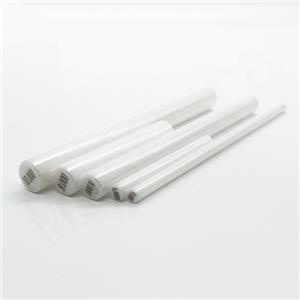
Machining: Due to the hardness of technical ceramics, diamond grinding, lapping, polishing, milling, turning, and cutting are employed to achieve final dimensions and surface finish. Precision machining is often the most costly step, so designers should minimize machining requirements where possible.
Quality Assurance: A robust quality management system, such as ISO9001:2015, ensures consistent product quality. Inspection methods include dimensional measurement, non-destructive testing (e.g., ultrasonic, X-ray), and material property testing (e.g., density, hardness, strength). Statistical process control (SPC) is often used to monitor and improve production processes.
5. Supplier Evaluation and Partnership
Selecting the right supplier is as important as selecting the right material. A reliable supplier should demonstrate:
Material Expertise: In-depth knowledge of ceramic materials and their applications, with the ability to recommend optimal solutions.
Manufacturing Capabilities: A comprehensive range of forming and machining technologies to meet diverse requirements.
Quality Systems: Certification to ISO9001:2015 or equivalent, with a proven track record of high-quality output. A qualified rate of over 99% is a strong indicator of process control.
Customization and Support: Ability to provide custom designs, prototypes, and technical support throughout the product lifecycle.
Responsiveness: Prompt communication and short lead times are critical for project success. A supplier that responds within 24 hours is preferable.
XIAMEN MASCERA TECHNOLOGY CO.,LTD. exemplifies these qualities. As a China-based supplier specializing in custom manufacturing of technical ceramic components, Mascera offers a broad range of high-performance materials including alumina, zirconia, silicon nitride, silicon carbide, boron nitride, and aluminum nitride. The company has completed production lines for molding, sintering, high-precision machining, and quality inspection. Mascera's products conform to ISO9001:2015 quality management system, and they are capable of delivering fully dense ceramic components with accurate size and surface finish control, and prompt lead time. Since its foundation, Mascera has committed to providing ceramic components of the highest quality and has built faithful partnerships with customers. Currently, their products have been exported to more than 30 countries and are widely applied in industries like machinery, automotive, chemistry, medical, energy, electronic, semiconductor, aerospace, and telecommunication.
6. Case Studies and Industry Applications
Real-world examples illustrate the importance of proper material selection. In the semiconductor industry, alumina and aluminum nitride are used for wafer handling components and heat sinks due to their electrical insulation and thermal conductivity. In the automotive sector, silicon nitride is chosen for turbocharger rotors and rocker arm pads because of its thermal shock resistance and wear resistance. In medical devices, zirconia is favored for hip replacements and dental implants due to its biocompatibility and toughness.
Mascera has supported numerous high-tech enterprises and research institutes with custom ceramic components. For instance, a European aerospace company required silicon nitride bearings for a satellite application, demanding high precision and reliability. Mascera's expertise in material properties and machining techniques enabled the delivery of components that met stringent specifications, from prototype to mass production.
7. Future Trends and Innovations
The field of technical ceramics is continually evolving. Emerging trends include the development of nanostructured ceramics for improved mechanical properties, additive manufacturing (3D printing) for complex geometries, and multifunctional ceramics that combine properties like electrical conductivity and thermal insulation. Sustainability is also driving innovation, with efforts to reduce energy consumption in manufacturing and to develop recyclable ceramic materials.
Buyers should stay informed about these trends to leverage new opportunities for performance enhancement and cost reduction. Collaborating with a forward-thinking supplier like Mascera can provide access to cutting-edge solutions.
8. Conclusion
Choosing formal technical ceramics requires a systematic evaluation of material properties, application requirements, manufacturing processes, and supplier capabilities. By following the guidelines outlined in this article, B2B buyers can make informed decisions that optimize performance, reliability, and cost. Partnering with an experienced and quality-focused supplier such as XIAMEN MASCERA TECHNOLOGY CO.,LTD. ensures access to high-quality custom ceramic components and expert technical support.
For further information or to discuss your specific needs, please contact Mascera using the details below.
9. Contact Information
XIAMEN MASCERA TECHNOLOGY CO.,LTD.
Email: info@mascera-tec.com
Phone: +86-592-5530093