How to Choose Professional Technical Ceramics: A Comprehensive Guide for B2B Buyers
Introduction to Technical Ceramics
Technical ceramics, also known as advanced ceramics or engineering ceramics, are a class of materials engineered to exhibit superior mechanical, thermal, electrical, and chemical properties. Unlike traditional ceramics, which are primarily used for decorative or household purposes, technical ceramics are designed for demanding industrial applications where performance and reliability are critical. As a B2B buyer—whether you are an architect, contractor, or procurement specialist—choosing the right technical ceramics can significantly impact the efficiency, longevity, and safety of your projects. This guide provides a data-driven, objective framework for selecting professional technical ceramics, ensuring you make informed decisions that align with your technical and commercial requirements.
Understanding Technical Ceramic Materials
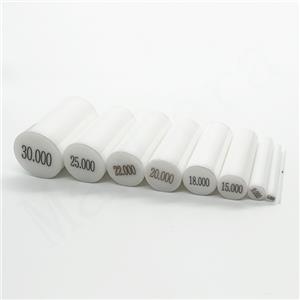
The first step in choosing professional technical ceramics is to understand the different material options and their properties. Technical ceramics encompass a range of materials, each with unique characteristics suited to specific applications. Common types include alumina, zirconia, silicon nitride, silicon carbide, boron nitride, and aluminum nitride. For instance, alumina (Al2O3) offers excellent electrical insulation and wear resistance, making it ideal for electronic components and wear parts. Zirconia (ZrO2) boasts high fracture toughness and thermal insulation, suitable for cutting tools and thermal barriers. Silicon nitride (Si3N4) provides high strength and thermal shock resistance, often used in bearings and engine components. Silicon carbide (SiC) excels in high-temperature and abrasive environments, while boron nitride (BN) is valued for its lubricity and chemical inertness. Aluminum nitride (AlN) has high thermal conductivity, essential for heat sinks in power electronics.
When selecting a material, consider the operating conditions: temperature, load, chemical exposure, electrical requirements, and wear mechanisms. For example, in high-temperature applications exceeding 1000°C, silicon carbide or silicon nitride may be appropriate, whereas alumina might suffice for lower temperatures. It is crucial to consult material property data sheets and, if possible, conduct prototype testing to validate performance. Companies like XIAMEN MASCERA TECHNOLOGY CO., LTD. offer a broad range of high-performance ceramic materials, including alumina, zirconia, silicon nitride, silicon carbide, boron nitride, and aluminum nitride, enabling customized solutions for diverse industrial needs.
Key Factors in Selecting Technical Ceramics
Selecting technical ceramics requires a systematic evaluation of several key factors to ensure optimal performance and cost-effectiveness. Below are the critical considerations:
- Mechanical Properties: Assess hardness, flexural strength, fracture toughness, and compressive strength. For load-bearing applications, high strength and toughness are essential. Zirconia, for example, has a fracture toughness of 6-10 MPa·m^1/2, making it suitable for high-stress environments.
- Thermal Properties: Consider thermal conductivity, coefficient of thermal expansion (CTE), and thermal shock resistance. Materials with low CTE, such as silicon nitride, are less prone to cracking under rapid temperature changes.
- Electrical Properties: Determine dielectric strength, resistivity, and dielectric constant. Alumina and aluminum nitride are often used as insulators, with alumina exhibiting a dielectric strength of 10-20 kV/mm.
- Chemical Compatibility: Evaluate resistance to acids, bases, and solvents. Silicon carbide and boron nitride offer excellent chemical inertness, suitable for corrosive environments.
- Wear Resistance: For abrasive applications, hardness and wear rate are critical. Alumina and silicon carbide are commonly used in wear parts due to their high hardness (e.g., alumina at 1500-2000 HV).
- Cost and Availability: Balance performance with budget. While advanced materials like silicon nitride may offer superior properties, they can be more expensive. Consider total cost of ownership, including maintenance and downtime.
By systematically evaluating these factors against application requirements, buyers can narrow down material choices. It is advisable to engage with material experts early in the design phase to avoid costly over-engineering or under-specification.
Manufacturing Processes and Quality Control
The manufacturing process significantly influences the quality and consistency of technical ceramic components. Professional suppliers employ advanced forming and sintering techniques to achieve fully dense, precise components. Common forming methods include dry pressing, isostatic pressing, injection molding, and tape casting, each suited to different shapes and sizes. For instance, dry pressing is cost-effective for simple shapes, while injection molding allows complex geometries. Sintering—whether pressureless, hot pressing, or hot isostatic pressing (HIP)—determines density and microstructure, directly affecting mechanical properties.
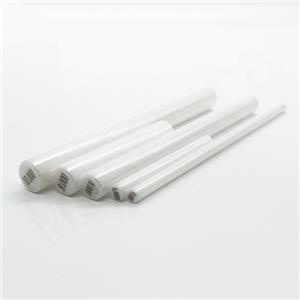
Quality control is paramount. A reputable supplier should adhere to international standards such as ISO9001:2015 and implement rigorous inspection protocols. Statistical process control (SPC) and non-destructive testing (NDT) methods like ultrasonic testing and X-ray inspection ensure defect-free products. For example, XIAMEN MASCERA TECHNOLOGY CO., LTD. operates completed production lines for molding, sintering, high-precision machining, and quality inspection, with a qualified rate of more than 99%. Their systemized quality inspection ensures compliance with ISO9001:2015, providing reliability and consistency.
When evaluating suppliers, inquire about their manufacturing capabilities, quality management systems, and traceability procedures. Request process capability studies (Cpk) and first article inspection reports to verify precision and repeatability. Additionally, consider the supplier's experience with similar applications and their ability to provide technical support throughout the product lifecycle.
Evaluating Suppliers and Total Cost of Ownership
Choosing the right supplier is as important as choosing the right material. A professional technical ceramics supplier should offer more than just products; they should be a partner in solving engineering challenges. Key criteria for supplier evaluation include:
- Material Expertise: The supplier should have in-depth knowledge of ceramic properties and applications, capable of recommending optimal materials and designs.
- Custom Manufacturing Capabilities: Ability to produce custom shapes, dimensions, tolerances, and surface finishes for both prototypes and mass production. Look for suppliers with in-house machining capabilities such as grinding, lapping, polishing, milling, turning, and cutting.
- Quality Assurance: Certification to ISO9001:2015 or equivalent, with documented quality control processes and a track record of high qualified rates.
- Lead Time and Responsiveness: Prompt quotation and delivery are critical. Suppliers should respond to inquiries within 24 hours and offer realistic lead times.
- Global Experience: Suppliers with export experience to multiple countries understand international standards and logistics. For instance, XIAMEN MASCERA TECHNOLOGY CO., LTD. has exported products to more than 30 countries, serving industries like machinery, automotive, chemistry, medical, energy, electronic, semiconductor, aerospace, and telecommunication.
- Total Cost of Ownership (TCO): While unit price is important, consider the total cost including tooling, shipping, inventory, maintenance, and downtime. A higher-priced component that lasts longer and reduces downtime can be more cost-effective.
Conduct supplier audits and request references from existing customers. A supplier committed to long-term partnerships, like Mascera, emphasizes customer-first values, integrity, and environmental responsibility, ensuring a win-win collaboration.
Case Studies and Industry Applications
Real-world examples illustrate the importance of proper material selection and supplier partnership. In the semiconductor industry, components such as wafer handling tools and insulating plates require high-purity alumina or aluminum nitride to prevent contamination and dissipate heat. A wrong material choice can lead to particle generation and yield loss. In the automotive sector, ceramic components in engine systems, such as silicon nitride glow plugs and turbocharger rotors, must withstand high temperatures and thermal cycling. Suppliers like Mascera have supported automotive clients with custom silicon nitride components that improve fuel efficiency and reduce emissions.
In the medical field, zirconia ceramics are used for implants and surgical instruments due to their biocompatibility and wear resistance. Precision machining is critical to meet tight tolerances. Mascera's expertise in high-precision machining and quality inspection ensures that medical components meet stringent regulatory standards. In energy applications, silicon carbide components are used in heat exchangers and pump seals for their corrosion resistance and thermal conductivity. By leveraging material science and application engineering, suppliers help clients overcome technical challenges and extend equipment life.
Future Trends in Technical Ceramics
The technical ceramics market is evolving, driven by advances in materials science and manufacturing technologies. Key trends include:
- Nanostructured Ceramics: Enhancing mechanical properties through grain refinement, leading to higher strength and toughness.
- Additive Manufacturing: 3D printing of ceramics enables complex geometries and rapid prototyping, reducing lead times and costs.
- Functionally Graded Materials: Components with tailored property gradients for improved performance in extreme environments.
- Sustainability: Development of eco-friendly materials and processes, reducing energy consumption and waste.
- Digitalization: Industry 4.0 integration for real-time monitoring and quality control, ensuring consistency and traceability.
Staying abreast of these trends helps buyers leverage new opportunities for innovation and efficiency. Suppliers investing in R&D, like Mascera, are well-positioned to deliver cutting-edge solutions.
Conclusion
Choosing professional technical ceramics requires a comprehensive understanding of material properties, manufacturing processes, supplier capabilities, and total cost of ownership. By following a systematic approach—defining application requirements, evaluating materials, assessing manufacturing quality, and partnering with a reliable supplier—B2B buyers can optimize performance and achieve long-term value. XIAMEN MASCERA TECHNOLOGY CO., LTD. exemplifies a professional supplier with multiple material options, custom manufacturing services, completed production lines, and a commitment to quality and customer satisfaction. With exports to over 30 countries and a focus on innovation, Mascera is a trusted partner for technical ceramic solutions.
Contact Information
For inquiries and consultations, please contact:
Company: XIAMEN MASCERA TECHNOLOGY CO., LTD.
Email: info@mascera-tec.com
Phone: +86-592-5530093